





Why Rainy Days Were Made for Cozy Mysteries
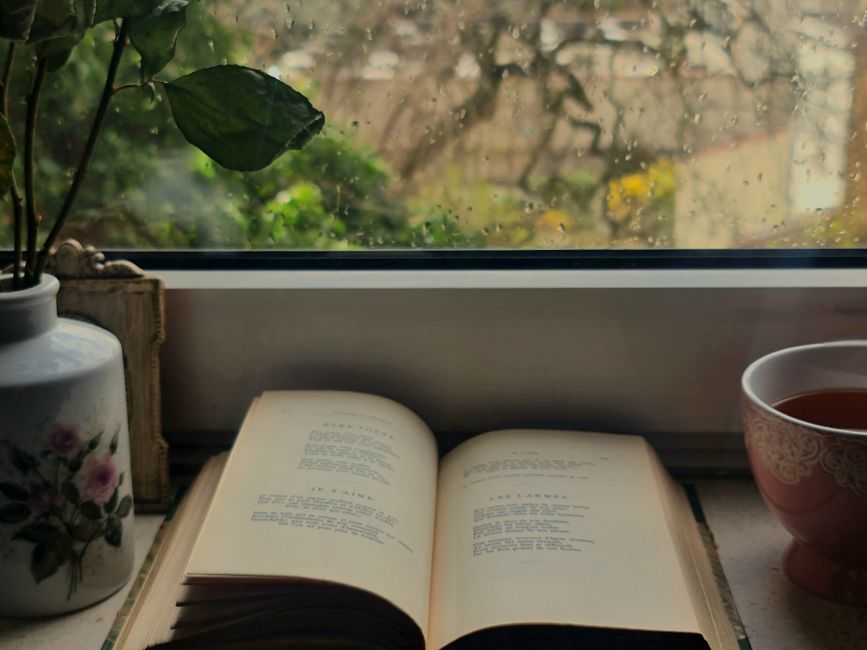
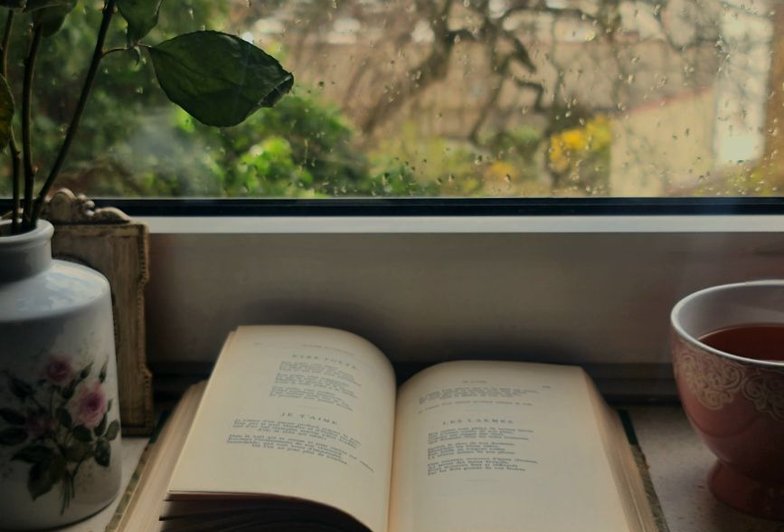
There is a particular kind of afternoon that seems to exist only for readers of cozy mysteries: the rain arrives sideways, the tea goes cold twice because you forgot about it, and somewhere in a village you have never visited, a body has just been discovered in the rose garden. Nobody is panicking. The detective is mildly annoyed about the mud on her boots. This, oddly enough, is the most soothing thing in the world.
I've thought a lot about why cozies pair so naturally with bad weather. Part of it is simple contrast. The storms outside are real and uncontrollable; the storms inside the book are tidy, solvable, and confined to a village of forty people with excellent gossip networks. When the world feels chaotic, a mystery that promises a solution by chapter twenty-eight is a form of reassurance. You know the rules. You know the amateurs will bumble, the constable will be skeptical, and the cat will somehow be involved.
The Comfort Is in the Constraints
Cozy mysteries are often dismissed as formulaic, and I'd argue that's precisely the point. The formula is a warm blanket with a plot. The violence happens offstage, the language stays clean, and justice is reliably served alongside a slice of something baked. That predictability isn't a failure of imagination — it's a promise the author makes to the reader on page one, and keeping it is a craft all its own.
What makes the best ones sing is the texture around the formula. A sleuth with an actual job she's good at. A village with a believable economy of secrets. A best friend who gets real page time and isn't just a sounding board. When I finish a truly good cozy, I don't remember the murder. I remember the kitchen.
How to Build a Rainy-Day Stack
My rule for a rainy-day pile is three books deep: one reliable series installment, one new-to-me author, and one re-read. The re-read matters more than people admit. Returning to a book you already love is like visiting a friend who never moved away, and there's no risk of disappointment when the weather is already doing its worst.
Pair it with something warm, turn off your phone notifications, and give yourself permission to read for two hours without accomplishing anything. That last part is the hard one. We are trained to feel guilty about unproductive time, but reading a cozy mystery on a rainy afternoon is not unproductive. It is maintenance. It is how you keep being a person who can handle the real, unsolved mysteries of an ordinary Tuesday.
So let the rain come. Somewhere, a teapot is about to be set down beside a body, and everything is going to be fine.







There's a scientific-sounding reason we crave a murder in a vicarage when the sky turns gray — and it has everything to do with comfort, not crime.
Forget sprawling cities — some of the most devastating novels ever written take place within a ten-minute walk of a single stoplight.
Twelve books in a beloved series can feel like a gift or a chore — here's how to pace yourself so the magic lasts.
Bakers, librarians, and retired schoolteachers keep solving murders — and honestly, we wouldn't have it any other way.
For readers who want the depth of literary fiction and the pull of a whodunit, these crossover novels deliver both.